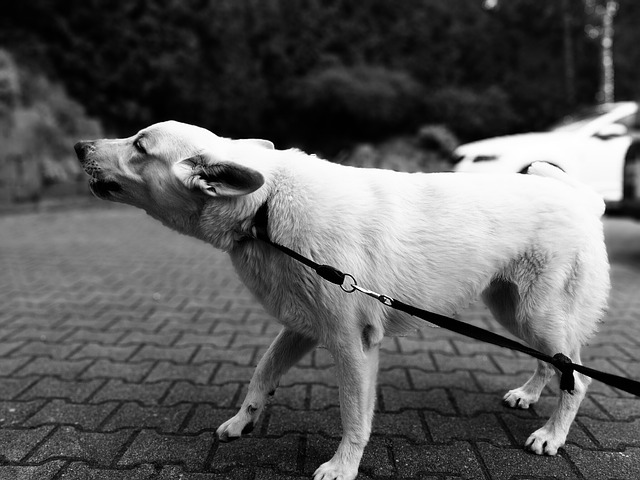
Walks can be pretty stressful
when you have a reactive dog right?
If you have a dog that explodes into a frenzy of barking, spinning and lunging when they see other dogs, people, bikes, traffic, strange animals etc, it can become a never ending cycle of stress and upset for both you and your dog, which can put a lot of strain on your relationship and the enjoyment of your day to day life together.
Do any of the following apply to you?
- You dread going for walks with your dog
- You spend your entire walk constantly scanning the environment for triggers that might set your dog off
- You feel embarrassed and upset by your dogs behaviour
- You feel out of control when your dog reacts badly to something
If any of these sound familiar, I know firsthand, it really isn’t the enjoyable, carefree picture of living with mans best friend you’d hoped for, but read on to see if any of the information here could help you. I have written this article based on Reactivity to other dogs, but the same principles can be applied no matter what your dogs particular trigger is.
Training and behaviour modification for this kind of challenge takes time, it isn’t something that will change in the space of a week or two. So your number one goal, to begin with, is to aim to keep your dog under threshold as much as possible. What I mean by that, is prevent them from being put in a position where they react.
Remember, although this may seem like you’re avoiding the problem, this is in fact an important part of the training process, to reduce the frequency and intensity of reactive outbursts, whilst you’re working toward helping your dog feel more comfortable with these experiences.
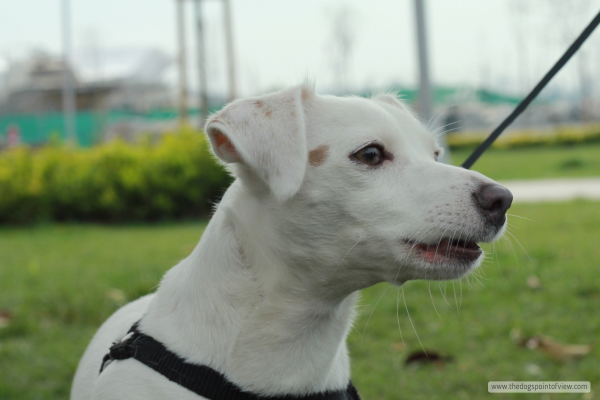
The more times your naturally evolved dog ends up in this position, two things are happening. The first is that your dog will feel like you aren’t dealing with these situations, so they will do what they feel necessary to keep themselves safe (hence reaction).
And the second thing is, the more often they react, the more they’re practising & strengthening the ‘behaviour of reacting’. When the dog (or trigger) that was too close for comfort moves on by, your dog will see this as a win! They don’t know the dog was going to go by anyway, they think their offensive barking & lunging MADE that dog go away.
So you can see why it only takes a few repetitions before this becomes their habitual ‘go to’ behaviour, meaning it will quickly become an ingrained habit.
It may help if you can think of this proactive avoidance approach as a bit like driving a car – you need to know what route you’re going to take before you set off and you need to be aware of what’s happening around you, ready to manoeuvre & respond if something unexpected happens. A bit like in your driving test when you have to say out loud everything you see, so your instructor knows you are aware of everything happening ahead of & around you. (Do they still do that? Or am I showing my age!)
So by proactive avoidance I don’t mean anxious scanning, I just mean you always want to be present & aware on your walks, so you’re always in the driving seat and ready to respond calmly to any triggers that may present themselves. This may mean…
- Planning your walks carefully
- Being prepared to do a U-turn and go back the way you came
- Crossing the street – another reason to plan your walk carefully
- Always having an exit strategy in your mind for wherever you are walking
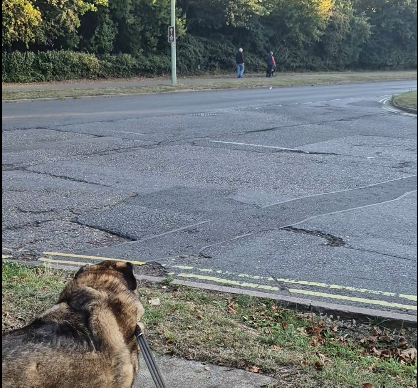
Reactive Dogs Need Proactive Handling
- Create Distance by previously teaching & practising controlled exit/maneuvering techniques
- Learn how to use your lead to both communicate & support your sensitive dogs
- Allow your dog to watch IF they’re calm
So these things need to happen before your dog starts reacting, don’t wait to see if they’re going to react or not. It’s much better to proactively and calmly create some distance as soon as you see a trigger, then if your dog remains calm, you will be able to use that situation to do a little bit of positive association training as the dog/trigger passes you by.
If you wait until your dog is already reacting to do something (over threshold) food and treats are unlikely to work anymore, (emotional reactivity shuts down digestion as part of the fight or flight defense mechanism) and you’re going to have to battle against them and manhandle them in order to move away from the situation – which can add to the negative association they already have.
This is not a learning environment – you are now purely in management and control. All you can do is manage as best you can and get out of the situation as quickly and calmly as possible.
Things to remember if you’re dog reacts:
- Avoid shouting and getting upset yourself – stay calm
- Forget trying to do any ‘training’ or trying to do things the best, most positive way – just get yourselves out of the situation
- Avoid any form of physical punishment or aversive training method, this will likely make your dogs reaction worse, and increase the risk of you getting a redirected bite. It could also damage your relationship with your dog, which could reduce your chances of eliminating the problem long-term. A large part of rehabilitating a reactive dog lies in trust within the human-canine partnership – especially when you live with a natural world dog!
- Obviously if your dog is lunging, hold tight, but try to release the tension in the lead at any opportunity you can – I know this is easier said than done! (This is something I can help more with on the Reactive to Rebalanced Roadmap program.)
- Speak calmly but in a confident voice ‘It’s ok [fido] – let’s go, this way’ – ideally with both these verbal cue’s previously taught & established.
Once you’re able to give some time and attention to working on your dog’s reactivity, they will gradually be able to cope with these close encounter situations better, but until then…. ^^THIS^^ is my advice.
I get it – it’s a lot to deal with at times!
I know (first hand) how stressful, upsetting and downright exhausting it can be when you have a reactive dog, whatever their trigger may be. I’ve had them myself, and worked with many. I know how much it can get you down, put a strain on your family and feel like all the wonderful reasons and dreams you had of sharing your life with your dog seem to have disappeared out of the window!
But you don’t have to do this alone.
For those of you struggling with dogs that overreact, I know how much support you need, this can be a pretty complex behaviour to navigate successfully and that can take time, it’s not a quick fix problem and I get that it feels isolating, especially if you’re not making progress. I know how helpful it can be to adopters if they could just ask a question when you need to, have someone to share stresses with, someone who will understand and be able to offer you support, advice and practical solutions along the way.
Which is why I have created a range of ways you can get help with your reactive overseas rescue dogs – courses, workshops and memberships all created specifically with our often sensitive and complex Romanian and overseas dogs in mind.
If you want to go it alone there is my Reactive to Rebalanced Roadmap program – A deep dive program covering everything you need to know, learn and understand so you can support your dog and yourself as you work through a structured progress plan. A week-by-week clear path so you can start to enjoy calmer & more relaxing walks with your beautiful dogs.
Or maybe a workshop would be a better fit for you – My Reactivity on Walks Workshop is the biggest selling workshop on my website – and a great place to start if you want general guidance on the best way to work with your reactive dogs – what to do/not to do. It includes a 2hr workshop recording, downloadable workbook + lots of supporting resources (teaching guides + video demos)
Or if you would like to work with me personally, you can find me providing daily support inside my Adopters Coaching Group (which has reactivity workshops/courses inside) or I offer premium 1-1 high level support coaching programs which start with a comprehensive assessment to make sure we fully understand what your plan needs to include to support you and your dog as the unique team that you are.
You can find all the details here 👉 Comprehensive Behaviour Assessment
Reactivity on walks is often not a standalone issue – it can be affected and compounded by any number of other contributing factors, which is why it can be difficult to see progress, but it is possible, and we can help you.
PS: If you’re not a member of our community Facebook group – come on in! JOIN THE DOGS POV COMMUNITY FB GROUP HERE – Lots of helpful tips/info in there too!
